
Can Birdwatching Change Your Brain?

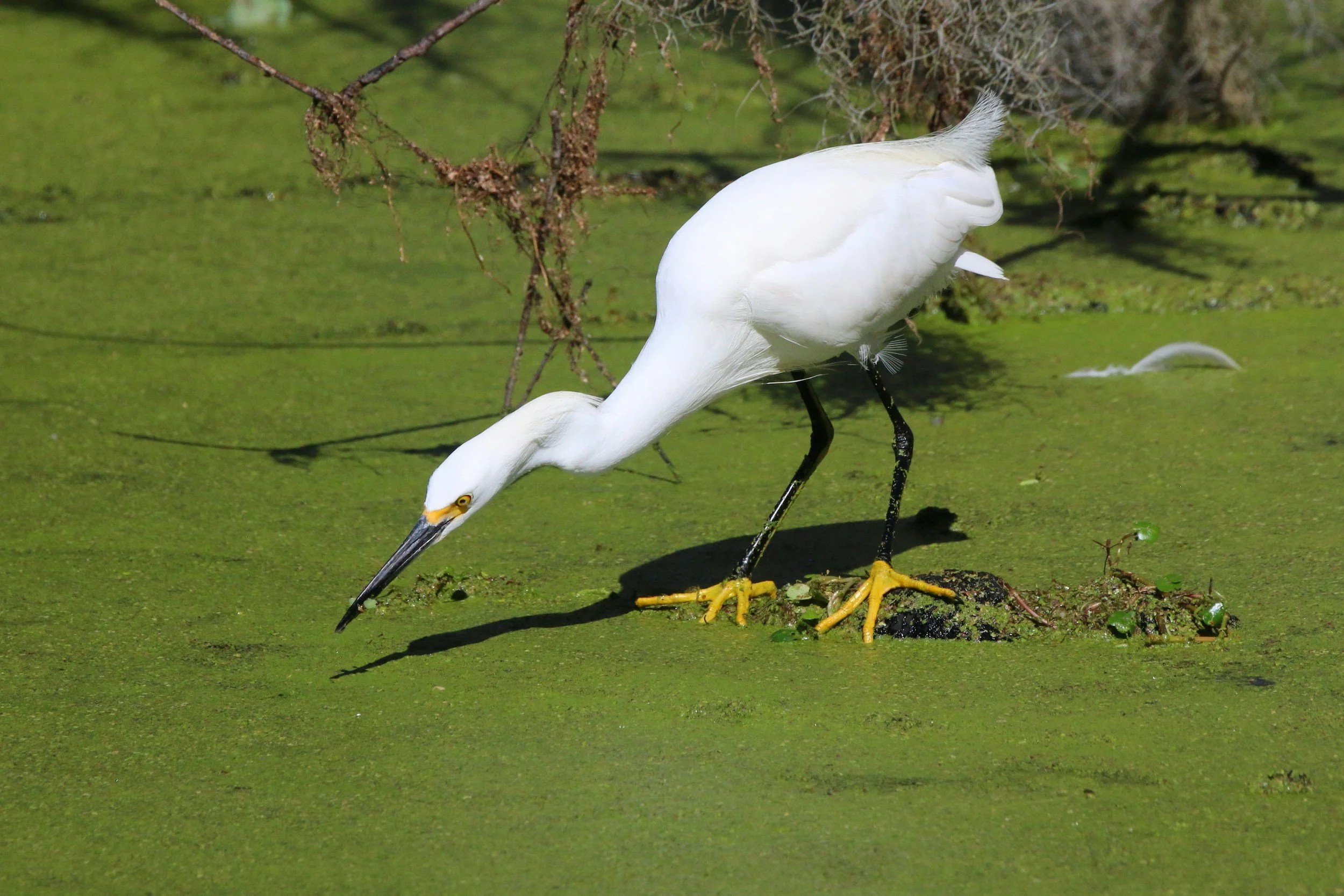
What is the difference between a Great Egret and a Snowy Egret? At a quick glance these two wading birds look very similar, but after closer observation you’ll notice the bright yellow “golden slipper” feet of the snowy egret, pointy dark beak and the lacy-white plumes that grow from the rear crown down the back of its neck, wisping in the wind on a breezy day. Or, you’ll see the long s-curved neck of the Great Egret, black legs and bright yellow beak standing out somewhere along the water’s edge.
The ability to recognize and remember these little changes in features, silhouette, movements, sound and behavior between different species increases your brain’s neuroplasticity, meaning, you can literally rewire your brain to become sharper over the course of your life by birdwatching! A study published by the Journal of Neuroscience found increased cellular density in the frontoparietal and posterior cortical regions of the brain, areas responsible for object recognition, memory, and perception, in expert birdwatchers when compared to novice birdwatchers. Fascinating stuff!
Not only that, but the melodic sound of songbird calls activates our parasympathetic nervous system (PNS), causing our heartbeat to slow, muscles to relax, and a steady calm to wash over the body. This is because birds only sing when they know their environment is free of danger, and early humans associated the pretty songs from our feathered companions as a sign of safety, one we still remember deep inside on a primal instinctual level. Listening to bird calls first thing in the morning lowers cortisol and helps us to be more grounded and intentional throughout the day, along with creating a powerful connection to the natural world around us.